
Separation is rarely basic. Whether you’re finishing a short marital relationship or separating years of common property, comprehending Michigan divorce legislations helps you come close to the process with quality and control. If you live in Oakland Area or Wayne County, it’s specifically beneficial to recognize how regional court procedures may affect your situation.
Listed below, we’ll break down just how to apply for divorce in Michigan, what to get out of the separation process, how much it may cost, and why having a skilled household law lawyer on your side can make all the distinction.
How Divorce Works in Michigan
Michigan is a no-fault divorce state, indicating neither spouse requires to confirm wrongdoing to file. The only lawful requirement is that event indicates that there has been an overall failure of the marriage, and there’s no practical opportunity of reconciliation.
That simple statement starts a complex process involving home division, youngster custody, and occasionally spousal support, depending upon your scenarios.More Here michigan tr 205 At our site
How to Declare Separation in Michigan: Step by Step
If you have actually determined to submit, your initial step is to file a grievance for Divorce in the Circuit Court of the county where you or your spouse lives. In Michigan, that’s the Family Department of the Circuit Court.
So, if you reside in Oakland County, you ‘d submit at the Oakland Region Circuit Court in Pontiac; if you stay in Wayne Area, you ‘d submit at the Wayne Area Staff’s Workplace in the Coleman A. Young Municipal Center, Detroit.
Step 1: Examine Residency
You have to meet Michigan’s residency needs before declaring:
- You (or your spouse) have to have resided in Michigan for a minimum of 180 days prior to declaring.
- You should have resided in your present region for at the very least 10 days before filing.
If those boxes are checked, you’re eligible to begin.
Action 2: Prepare the Paperwork
You can get divorce forms from:
- The staff’s office at your county courthouse
- The State of Michigan HHS web site
- Your separation lawyer
The core papers consist of:
- An Issue for Separation (the major petition)
- A Summons
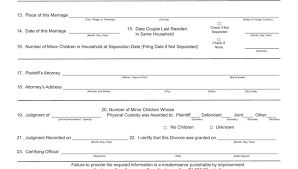
- A Document of Divorce or Annulment
- A Confidential Case Stock (if minor kids are entailed)
If you have minor children, extra forms regarding protection and assistance will be needed. You’ll need to load these out completely and accurately prior to declaring.
Action 3: File the Problem
Bring your completed types to the Circuit Notary’s office. Once submitted, the court will appoint your instance a number and a court.
Step 4: Offer Your Partner
After declaring, you should legitimately offer your spouse with copies of the documents. That can either be carried out in person by somebody over 18 who is not associated with the instance or by qualified mail. Look into our guide on serving separation papers for more details.
You’ll then submit an evidence of service with the court.
Step 5: Await a Response
Your spouse (the ‘accused’) has:
- 21 days to react if offered in person, or
- 28 days if served by mail or out of state.
If they do not respond, you can request a default judgment. If they do, your case moves on toward arbitration or test, relying on whether it’s disputed or uncontested.
Do You Required an Attorney to Apply For Divorce?
No, you’re not lawfully called for to hire an attorney to begin a divorce in Michigan, however many individuals do once documents or property problems get made complex. While you can always file for yourself without lawful representation (pro se), doing so places you at risk.
Also a small oversight in the documents, filing process, or required disclosures can delay your case, influence protection decisions, or result in an unreasonable department of possessions. Without lawful advice, it’s likewise simple to misconstrue your civil liberties, neglect economic obligations, or agree to terms that do not offer your long-lasting interests.
Dangers of Filing a Divorce Pro Se
- Possession Department Errors: You might underestimate, omit, or misclassify marriage building.
- Guardianship Problems: Incomplete or vague parenting plans can bring about conflicts or court hold-ups.
- Document Mistakes: Incorrect forms or missing information can slow or threaten your situation.
- Financial Oversights: Without lawful input, it’s easy to miss hidden financial obligations or future obligations.
- Legal Mistakes: Misinterpreting state regulations may limit your legal rights or prevent appropriate enforcement.
- Missed Target dates: Filing late or in the wrong place can delay procedures or lead to termination.
- Unreasonable Agreements: You may agree to terms that negative aspect you long-term without recognizing it.
Constantly Go With an Attorney
A lawyer will assist you complete kinds appropriately, make certain all target dates are met, and combat to safeguard your rights from the first day. They’re your partner throughout the separation hearings, and come with knowledge and experience in tackling such instances. Separation attorneys assist safeguard you from any type of expensive mistakes during the proceedings.
At The Rubinstein Law Practice, we often start aiding customers before they file. That very early support prevents errors that can postpone the procedure or impact property and custody results later.
How Much Does a Separation Cost in Michigan?
There’s no one-size-fits-all answer, but expect to pay $175-$255 in court declaring costs, plus lawyer’s fees based on the instance’s intricacy.
Boost when disagreements occur over possessions and financial debts, wardship and parenting time, or property negotiation negotiations. A skilled lawyer can assist you recognize where to improve documents, stay clear of unneeded hearings, and reach a resolution effectively, conserving both time and money.
Michigan Separation Timelines: For How Long Does the Refine Take?
The fastest possible waiting period for a separation without small youngsters is 60 days. If small kids are entailed, the state enforces a 180-day waiting duration to permit time for parenting strategies and wardship arrangements.
That said, the total timeline of divorce process varies extensively based on:
- Whether the situation is objected to
- Exactly how swiftly partners can agree on divisions of property and parenting time
- The court’s organizing backlog
Situations including kids commonly take numerous months or even more, depending upon complexity and teamwork in between parties.
What Occurs During the Waiting Period
While you’re waiting, a number of things can take place relying on the intricacy of your instance:
- Temporary orders may be provided for child assistance, parenting time, or use of marital residential property.
- You and your spouse (via your lawyers or arbitrators) can discuss negotiations on residential or commercial property department, safekeeping, and finances.
- If disputes continue to be, your case may relocate to arbitration or a court hearing prior to the appointed court.
In most uncontested divorces, pairs settle on all major problems and only need a brief court look (or none in all) prior to a final judgment is gotten in.
In contested situations, especially those involving children or significant residential property, the procedure can take several extra months – or longer if trial dates are delayed.
Neighborhood Timelines: Oakland & Wayne Region
Both the Oakland and Wayne Region Circuit Courts comply with the very same Michigan separation statutes, but their instance quantity and scheduling can affect timing.
Oakland Region’s household department normally moves instances effectively, frequently scheduling very early arbitration. Wayne County’s docket is larger, so listening to days may take longer to protect, but proactive case administration by your lawyer can assist keep things on course.
Just How Michigan Divorce Courts Manage Divisions of Property & Protection
Our Oakland and Wayne Region separation lawyers have years of experience navigating the ins and outs of complicated instances. We’ll defend you to obtain your rightful share every action of the way, with a complete understanding of how the courts typically come close to separations.
Separating Residential Or Commercial Property & Properties
Michigan follows the rule of equitable circulation, implying residential or commercial property isn’t immediately split 50/50. Rather, the goal is to separate it relatively based on each partner’s situation.
Courts take into consideration aspects such as:
- The length of the marriage
- Each spouse’s payment to marriage residential or commercial property
- Everyone’s earning ability
- Any separate residential or commercial property possessed before marital relationship
Marital assets might include your home, retirement accounts, lorries, or other jointly gotten home. Juries aim for justness, not precise equality.
Guardianship & Parenting Time
When minor kids are entailed, courts prioritize their benefits. Michigan courts urge joint wardship setups whenever possible, promoting constant parenting time for both parents.
Variables affecting guardianship choices include the emotional ties in between parent and kid, stability of the home atmosphere, and each parent’s determination to sustain the other’s connection with the youngster.
When to Employ a Divorce Attorney
Also in an uncontested separation, Michigan’s step-by-step needs and waiting durations can produce confusion. An educated lawyer works hard to shield your rights when splitting property, negotiating parenting time, or declaring movements with the court.
At The Rubinstein Law Firm, our household regulation attorneys take an individual technique per separation instance, taking care of paperwork without delay, maintaining open communication, and moving instances ahead swiftly so our customers can start the following phase of their lives.
All set to Take the Next Action?
If you’re applying for separation in Oakland Area or Wayne Region, obtain simple lawful recommendations before you start. The Rubinstein Law office supplies cost-free appointments to review your choices, discuss what to expect, and assist you prepare for every step in advance.